
Designing Solutions for Food Insecurity at NIU: A Look Inside RHoK
The NIU community collaborates to design solutions to food insecurity at NIU
What if being hungry made it harder to succeed in college?
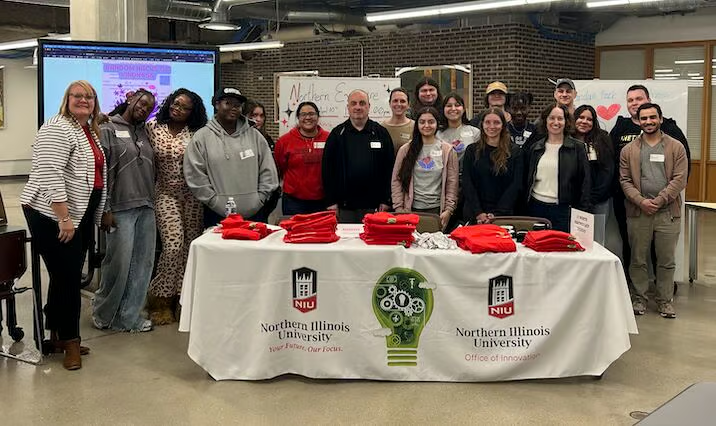
At Northern Illinois University, that question is a reality for many students. This semester, the NIU community came together at 71 North Partnership Studio to take on that challenge through Random Hacks of Kindness (RHoK), a collaborative effort to design solutions to food insecurity on campus.
So, what exactly is RHoK?
If you missed the lead-up, you can read our Spring 2026 RHoK announcement and our Spring 2025 kickoff post.
Random Hacks of Kindness (RHoK) is a fast-paced, collaborative workshop that brings together the NIU community to co-create solutions to real challenges at the university. This semester’s focus was on food insecurity, a critical issue impacting student success across campus.
Participants at 71 North Partnership Studio took on that challenge, designing solutions to food insecurity at NIU through RHoK. We were fortunate to collaborate with campus partners who brought valuable perspectives to the conversation, including Dr. Nancy Prange, Clinical Assistant Professor of Nutrition and founder of Huskie Harvest; Laura Fehling, Assistant Director of Edible Campus; and Dr. Kelly Olson, Dean of Students. Their insights helped ground the experience in the real challenges students face every day.
The event was facilitated by Federico Bassetti, Assistant Director for Innovation Ecosystem Development, alongside Vana Dakarian and Cindy Carbajal, Public Health and Biology (pre- med) students completing their internship at 71 North Partnership Studio. Their guidance created a collaborative and engaging environment that supported participants throughout the experience.
Understanding the Problem: Meet Elisa and Diya
In preparation for RHoK, materials were developed based on research on food insecurity both
nationwide and at NIU. Two personas, Elisa and Diya, were created to highlight common student
experiences.
Elisa is a first-generation student balancing school, work, and finances. She often skips meals to
make ends meet, which affects her focus, energy, and overall well-being.
Diya is an international student supporting her family while navigating a new environment. She
struggles to find affordable, convenient, and culturally relevant food options for herself and her
family.
These personas guided the entire workshop. Empathy maps, insight statements, and “How might
we…” questions were developed to ensure that every idea stayed grounded in real student needs.
Day One: Exploring the Challenge
 With this foundation in place, participants began the first phase of RHoK.
Participants were welcomed into the 71 North studio and introduced to the issue of food
insecurity. Our campus partners provided important context, helping participants better
understand how this issue impacts students at NIU.
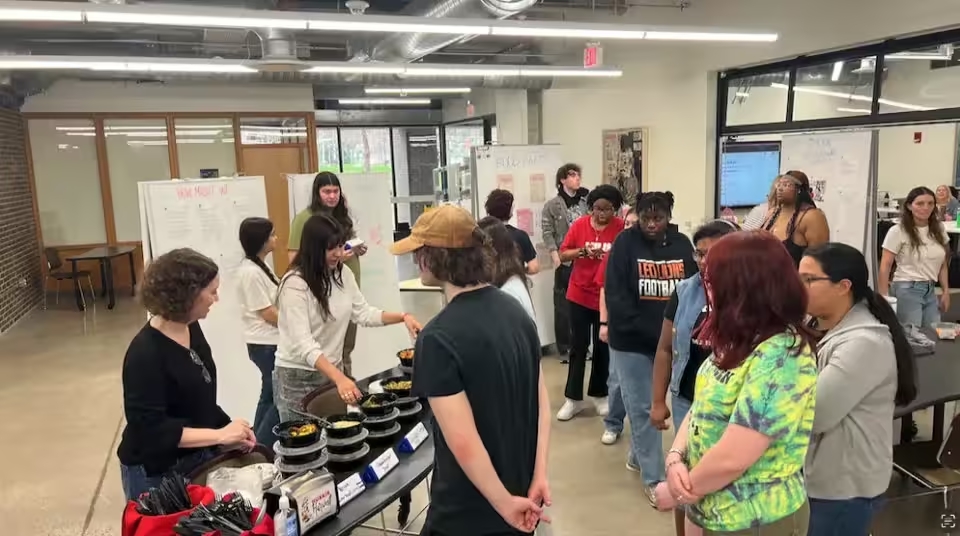
Participants then moved into the Opportunity Zone, where they explored a gallery of personas, empathy maps, and insights. Food samples from Huskie Harvest were also provided, creating a more immersive and tangible connection to the problem.
From there, teams engaged in a sailboat activity to map the problem space, identifying what helps students access food (the “wind”) and what holds them back (the “anchor”). After identifying key barriers, participants voted on the most critical challenges and began generating ideas.
These ideas were then evaluated using an impact vs. effort matrix, allowing teams to prioritize solutions with the greatest potential.
One theme quickly became clear: Convenience is a major barrier to accessing food resources. As a result, many of the ideas focused on making food more accessible, visible, and easier to obtain across campus.
Day Two: From Ideas to Action
Building on this momentum, participants returned the following week, ready to bring their ideas to life.
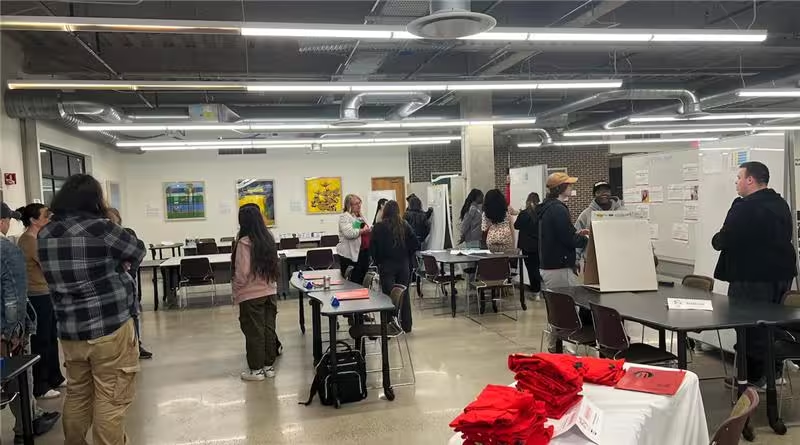
Over 20 participants formed three teams and generated dozens of ideas before narrowing them down to high-impact solutions. Day two brought ideas to life through rapid collaboration, prototyping, and creative problem-solving.
Across all teams, one insight clearly stood out: improving convenience through real-time information was key to increasing access to food resources.
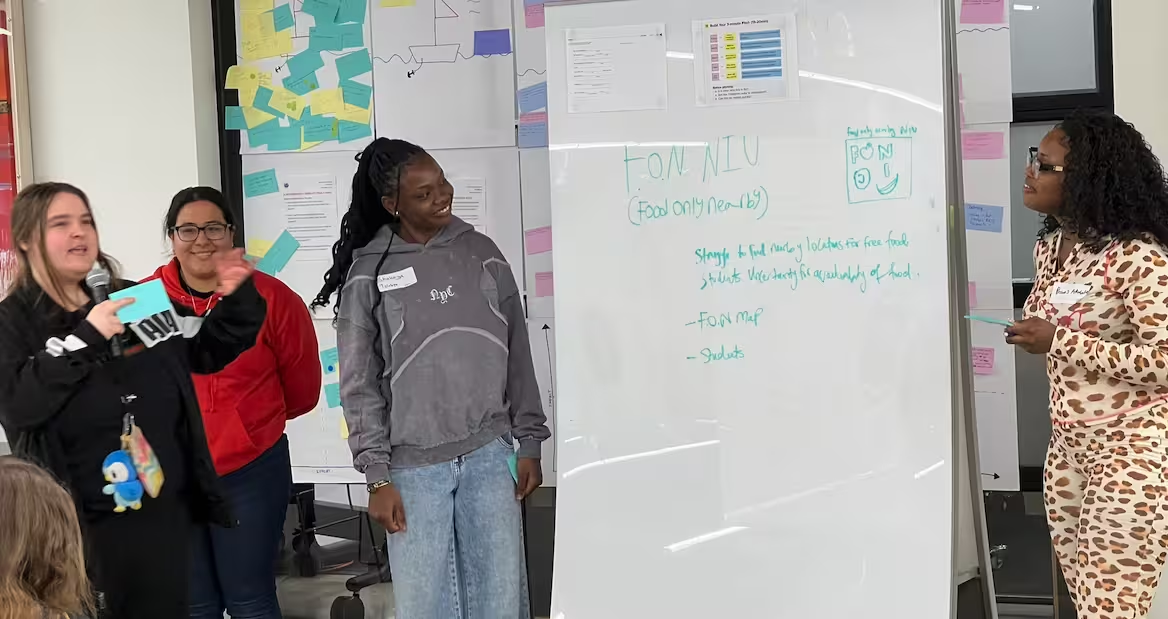
With just 15 minutes to prepare, each team developed and delivered a pitch to a panel of stakeholders. Presentations ranged from product sketches to energetic skits, showcasing both creativity and thoughtful problem-solving.
While one proposal was selected, all participants demonstrated a strong commitment to addressing food insecurity and supporting their peers at NIU.
Spotlight Solution: “NIU Free Food”
The selected team presented the app “NIU Free Food,” designed to directly address challenges
faced by students like Elisa and Diya, especially around time, access, and awareness.
The concept included three key features:
- Real-time tracking: A live map with daily updates on locations and hours of food resources
- Smart notifications: Alerts for availability, restocks, and limited supply
- Pre-order functionality: Allowing students to reserve meals for quick and convenient pickup
By focusing on accessibility and convenience, the solution addressed one of the most significant barriers identified during the workshop.
Meet the RHoKers
This work is supported by a dedicated team behind the scenes. Behind every RHoK NIU event is a dedicated group of collaborators who help make it possible each semester. Known as the RHoKers, this core team supports the design, coordination, and delivery of the experience, ensuring that participants have the structure, resources, and guidance needed to turn ideas into action.
The RHoKers group is coordinated by Federico Bassetti at 71 North Partnership Studio. The RHoKers include: Dr. Lynn Herrmann, Professor of Public Health and Health Education; Julie Ann O’Connell, Assistant Director, Center for Nonprofit and NGO Studies; Vanessa Neely, Administrative Aide, College of Health and Human Sciences; Karinne Bredberg, Director of Innovation, Partnership and Technology Transfer; Jordan York, Program Communications Coordinator, Office of Innovation; Brandon Goff, President, Innovation Club; Adam Bougher, Treasurer, Innovation Club.
Together, the RHoKers bring expertise from across NIU, spanning public health, innovation, nonprofit leadership, communications, and students’ perspectives to create a collaborative environment where meaningful ideas can emerge and grow.
Looking Ahead
RHoK brought together members of the NIU community to tackle a real challenge experienced by students. More importantly, it created space for collaboration, empathy, and action. This is just one step in an ongoing effort. We will continue developing ideas like “NIU Free Food” within the 71 North community, while preparing for future RHoK events that bring new voices and new challenges to the table. At 71 North Partnership Studio, we push past perceived boundaries and bring people together. RHoK is a starting point for change at NIU. Want to be part of the next one? Join us and help design solutions that matter.
You can also keep up with upcoming opportunities on our calendar and explore more stories on our posts page.