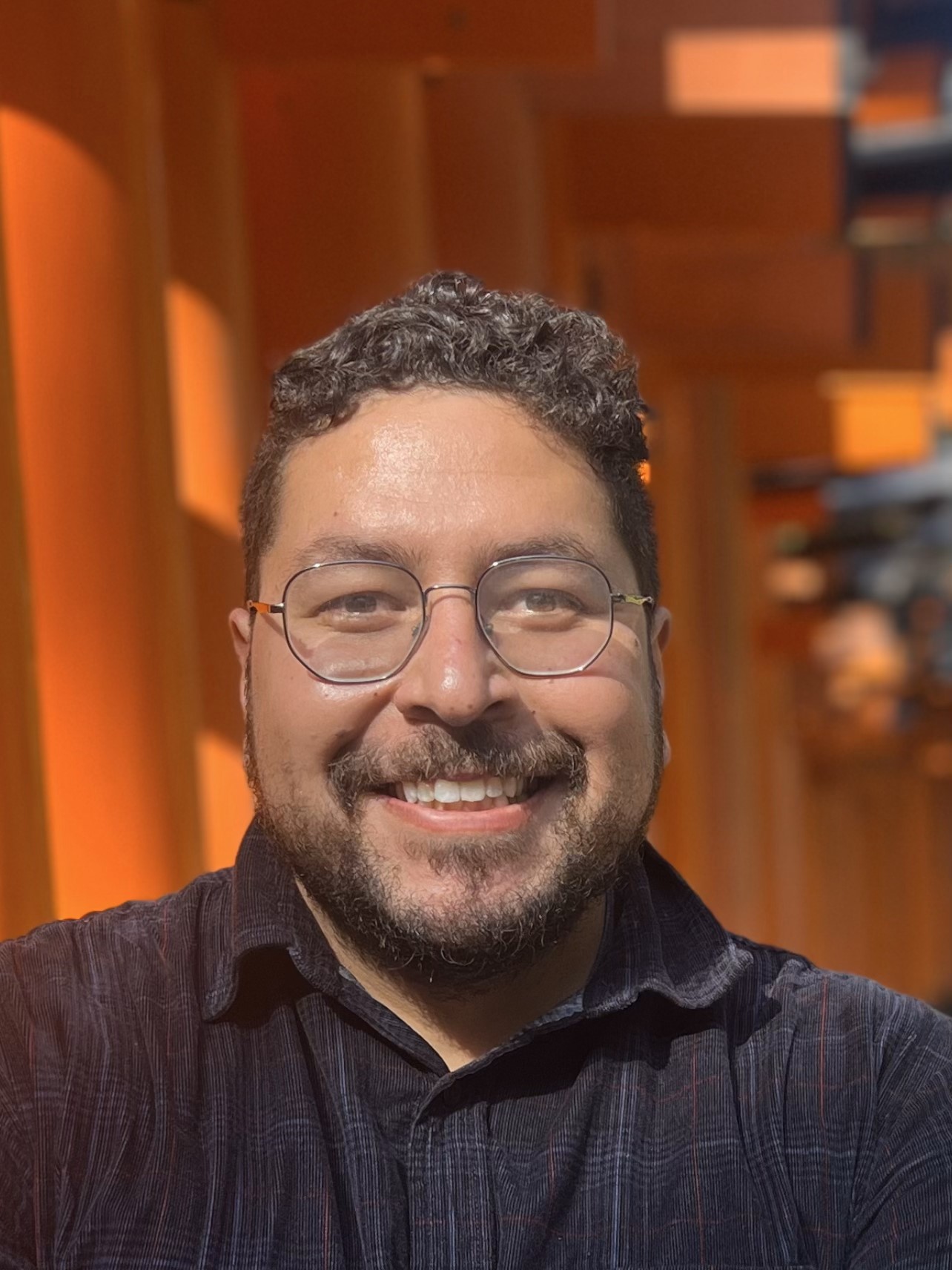
Richard J. Ortiz is an Assistant Professor of Psychology at Northern Illinois University and principal investigator of the Ortiz Neuroscience Lab. He studies how social behavior is passed from one generation to the next, using 3D printed brain-on-a-chip devices and ex vivo calcium imaging to keep slices of brain alive long enough to ask them questions.
His lab builds the tools it needs. Alongside microfluidic perfusion devices released as open-source designs through NIH 3D, his team — spanning psychology, biology, and engineering — is developing a cost-effective, open-source microscope capable of imaging an entire brain in 3D. That instinct to open up the “black box” of research equipment is what brought him to 71 North: a place where problems get looked at from more than one angle, and where the skills behind the work can be handed to the next student, staff member, or faculty member who wants them.
Education
Ph.D. in Biological Sciences, Concentration in Behavioral Neuroscience, The University of Texas at El Paso (2015 - 2021)
Certificate in Big Data Analytics, Department of Mathematical Sciences, The University of Texas at El Paso (2021)
B.S. Health and Exercise Science, Pre-Sports Medicine, Oral Roberts University (2008 - 2013)
Expertise
- Brain-on-a-chip microfluidics
- Ex vivo calcium imaging
- Open-source 3D printed instrumentation
- Behavioral and social neuroscience
- Big data and network analysis
Publications
- 3D Printed Bubble Perfusion Brain Slice Culture Device — open-source design published on NIH 3D (RJ Ortiz, G Gutierrez, CA Baker)
- Ortiz RJ, Gutierrez GG, Norman VN, Prosser RA, Baker CA (2025): Bubble perfusion brain slice culture with single-droplet stimulus delivery in a 3D printed microfluidic device. ACS Measurement Science Au.
- Colarusso B, Ortiz R, Yeboah J, Chang A, Gupta M, Kulkarni P, Ferris CF (2024): APOE4 rat model of Alzheimer's disease: sex differences, genetic risk and diet. BMC Neuroscience.
- Kenkel WM, Ortiz RJ, Yee JR, Kulkarni PP, Carter CS, Cushing BS, Ferris CF (2023): Neuroanatomical and functional consequences of oxytocin treatment at birth. Psychoneuroendocrinology.